

This month, in the car, I was listening to Mustafa Suleyman’s “The Coming Wave” when it reached its darkest stretch.
Chapter twelve. I stopped it and sat there.
I had been listening to this book for several days, and it felt heavy and ominous.
Under it was a feeling I recognized.
Vindication. He saw what I saw.
In April I published a piece called To Be Determined.
Then I determined it. The question isn’t whether the wave is coming. It is.
That same week I wrote that my intuition was firing.
I trusted it.
I’ve spent five months acting on it.
So where did that intuition come from?
Months of YouTube and podcasts. Some I went looking for.
Some the algorithm handed me.
I was asking four questions.
How do I actually do the thing?
How does it work?
How does it work for me?
How will it work for me and everyone around me down the road?
Every one of those questions assumes the thing works. The algorithm answered in kind.
I went looking for books.
Ethan Mollick’s “Co-Intelligence” first.
Nicolas Chaillan’s “Replacement.”
Suleyman.
Now Pascal Bornet’s “Irreplaceable.”
The titles alone suggest opposing futures. The arguments are more complicated.
But every book I picked reinforced something I already believed.
AI is a big deal, and it’s coming soon.
I built that shelf without meaning to.
Call it unintentional intention.
My gut picked the books, and the books agreed.
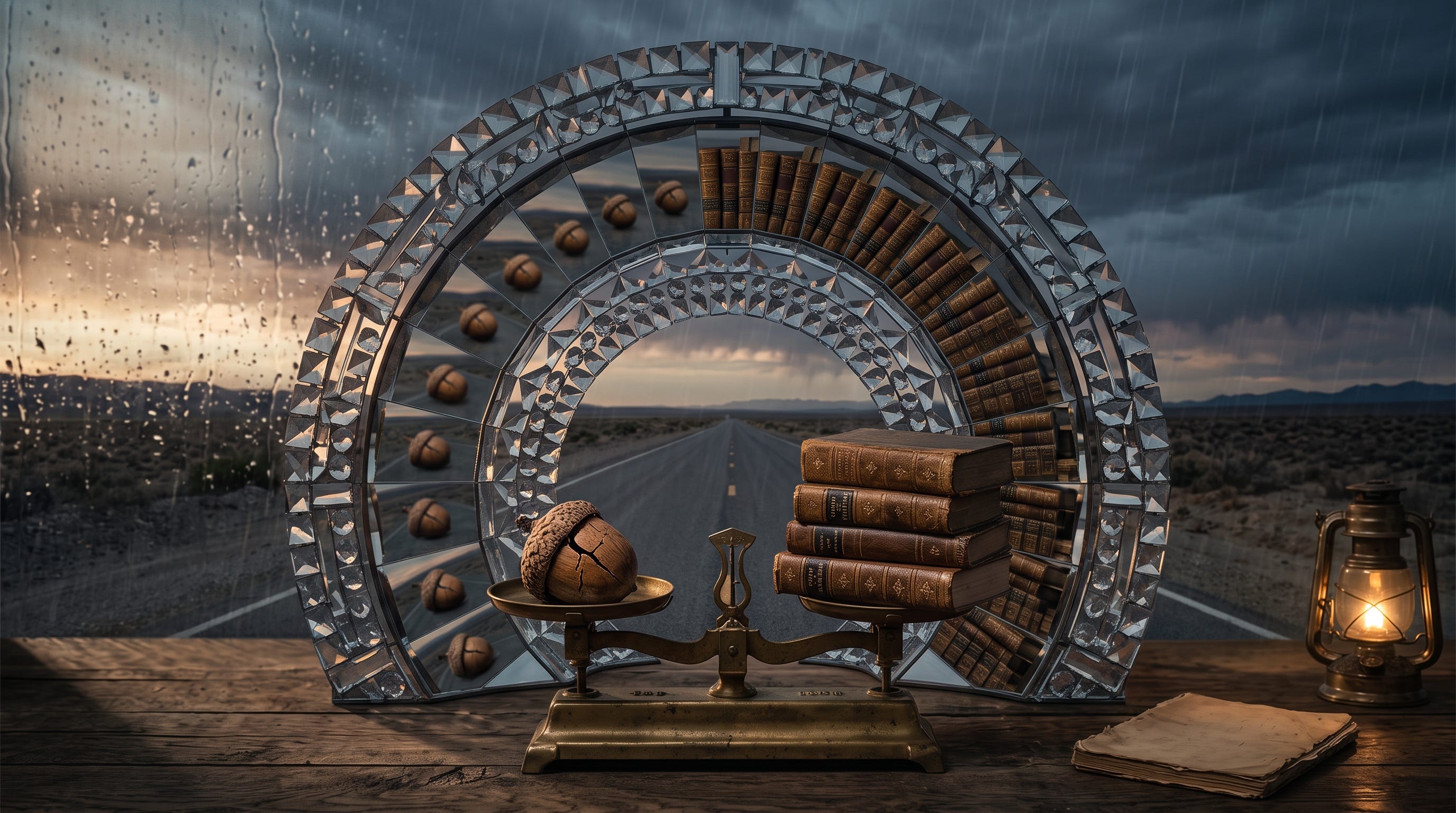
Paul Revere and Chicken Little both carried a warning.
One had word of an approaching army. The other had an acorn.
In the moment, both felt equally sure. What separates them is the review.
Chicken Little gathered believers, each repeating the warning until they followed a fox.
Revere belonged to a network of riders carrying news of British troop movements. When he was captured, Samuel Prescott got through to Concord.
My review has one road.
I say “not if, but when.” I’m sure about the if.
The when and the impact are what I’m actually trying to work out, for me and for the people around me.
That’s where the questions get harder.
What if AI doesn’t get much better than it is today?
What if it takes considerably longer to deliver on its promises?
What if the impact is smaller than I’ve imagined, or simply different?
Every voice I’ve let near those questions agrees with me. I can see exactly how.
When I first asked for voices on AI, most of the names were unfamiliar. I kept going. I read them, followed them, and they became part of my intellectual neighborhood.
Later I asked for the dissenting voices. Most of those names were unfamiliar too.
One wasn’t.
Cal Newport, a voice I know and respect. He’s one of the people asking that first question.
My guard went up, and I stopped there.
Two lists of strangers. I followed one.
When you shape ideas without that tension, the conclusion arrives before the exercise begins.
Even as I write that, I feel it in my gut. The evidence is so strong in my mind.
In my mind.
That’s the place under review.
I have a line I say more often than I’d like to admit.
“I reserve the right to be wrong. But I’m rarely wrong.”
One clause of humility, then certainty takes the last word.
I’ve believed for years that with great power comes great responsibility. It’s a line from a comic book, and I built a mission on it. Be the voice in the room.
The position is self-anointed. The problem solver at work. The guide. The husband and father of two boys about to enter a changing world.
Whatever my shelf argued, everyone who leans on those roles inherits it.
Responsibility is a good reason to get it right.
It’s also a good reason to need to be right.
When your gut is this sure, how do you tell intuition from an echo you built yourself?